
OUTCOMES REPORT & CASE STUDY
Stephanie Kane – SILO participant
Evaluator: Tony Gentry
Date: 4/29/2024
Brief Summary:
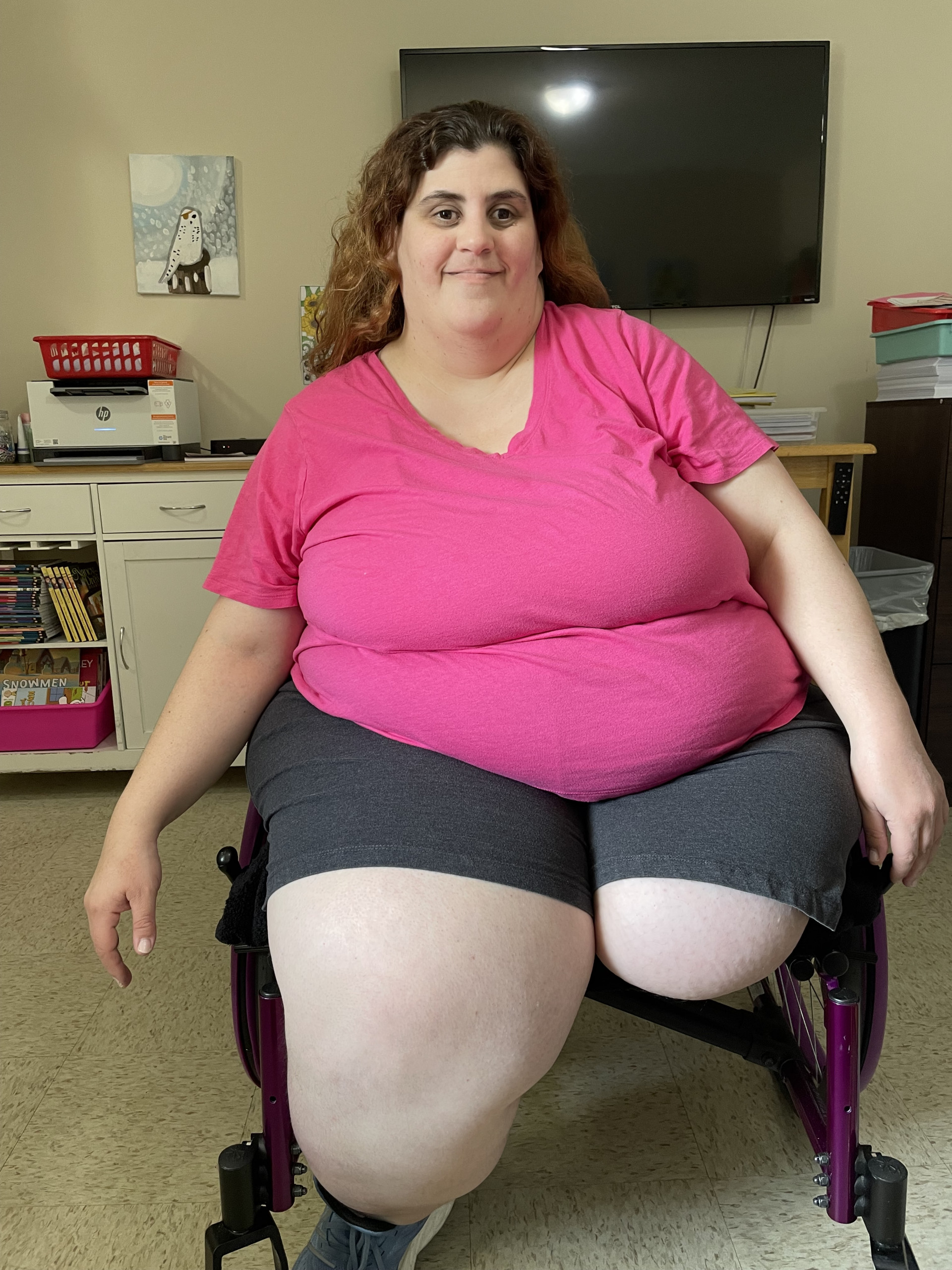
Stephanie Kane is a 40-year old (bd 7/3/1984) white woman with a right-sided above knee amputation due to cancer. She also has an intellectual disability. A high school graduate, she had worked for 10 years as a store cashier before her cancer diagnosis, but has not worked since. A manual wheelchair user, Stephanie lives alone in an accessible first-floor one-bedroom apartment in Kings Park, NY. A paid care aide assists her at home and drives her to 5x/week community activities (gym, wheelchair dance class, arts classes, etc.). Her mother lives in a nearby town and is supportive. Stephanie sleeps at her parents’ house on weekends, when she does not have a care aide.
Stephanie credits the grant-provided equipment with improved safety, energy conservation, and general well-being. She especially likes the Ring video doorbell, because there have been recent break-ins at the complex, the Echo voice assistants, which allow her to engage with the outside world, her reacher-grabber, and the improved bathroom and work space lighting.
Key Phrases from Outcomes Interview:
“I love my Ring doorbell!”
“The bathroom light is important; they turn on at night when I need to go to the bathroom and can’t see.”
“I’m just starting to learn what the Echo thing can do. Every day there’s something new.”
“I didn’t like the first water leak thingies they put in. They kept beeping when the housekeeper was mopping the floor. But the new ones, they beep in my phone, so I can turn them off if they go off by accident.”
Outcomes Report Narrative:
See initial Supports Intensity Scale (SIS), which lists some support needed for bathing, dressing, food preparation, medication management, housekeeping and community access. This support is typically provided by her care aide.
See KANE-SHINY.docx for additional identified needs.
See Kane-AT-Recommendations.docx for complete list and pricing for AT items recommended, based on initial assessment.
On initial evaluation (7/17/23), Stephanie had these devices already: (1) smart tv, (2) iPhone, (3) wifi, (4) 2015 MacBook Air computer, (5)
On initial evaluation, it was clear that Stephanie could benefit from voice-enabled lights and appliances to conserve energy, as she has some difficulty wheeling about the apartment. As recommended, SILO installed an Echo Show 10 in her living room (see video demonstration) and an Echo Dot in her bedroom, however, the landlord refused SILO’s request to install smart wall switches to control overhead lights. Stephanie uses the voice assistants now to check weather and news, play music, and communicate with her mother in case of emergency. A standing lamp provided by SILO can be controlled by voice as well. She was shown how to set up appointment reminders on the Echo’s, but has chosen not to use that feature, preferring a paper-based calendar.
As a safety and energy conservation measure, SILO installed a Ring Video doorbell, which is connected to Stephanie’s iPhone and shared with her mother’s phone (see video discussion). The smart-lock and smart deadbolt recommended were refused by her landlord. To assist with navigating the front door, a looped strap was recommended, but the version provided was unwieldy, so it was returned, and Stephanie says she can manage the door okay without it.
Stephanie’s bathroom includes wall grab bars, a roll-in shower with shower chair, and a toilet bidet. Transferring from wheelchair to shower chair had proven unsafe, per Stephanie, because of slippery floors. Waterproof grip tape was installed on the shower stall floor by SILO.
Stephanie had requested a handheld bidet to go along with the seat-mounted bidet on her toilet; at the time of assessment, this item had not been delivered, and Stephanie said that she no longer needed it, as she was comfortable with her current hygiene supports.
Stephanie did not identify any cooking appliance needs and demonstrated using the sink, oven, accessing cabinets, and preparing frozen foods in her air fryer. Currently her aide prepares frozen meals for her to re-heat. We discussed acquiring a toaster-oven, but her mother vetoed this item. Stephanie turned down a robot vacuum cleaner, saying she has a weekly housekeeper who does that.
The laundry room for this apartment complex is located down a hill in another building. Stephanie has fallen from her wheelchair trying to get to/from the laundry room. We discussed using an attachable wheeled basket to carry her laundry, but it was determined that the safest solution is to do her laundry on weekends, when she is at her mother’s house.
Additional equipment provided: (1) a night-light that converts to a flashlight in case of a power outage; (2) a voice-activated bathroom light for safety during night-time bathroom trips; (3) a reacher-grabber for accessing items from seated position in wheelchair; (4) easy to use aerosol fire extinguisher (placed in kitchen); (5) smart water leak alarms under kitchen sink and beside toilet, linked to app on Stephanie’s phone; (6) voice-enabled standing lamp for bedroom (Stephanie chose to use it at her work table in living room instead); (7) a desk lamp for her work table artwork; and (8) recommendations for mood and symptom tracker apps (Calm, Symple, Notes).
Subjective Responses:
SHUSS-NY Assessment:
The highest score on this tool is a 10. Stephanie’s total rating was 9.5. Itemized scores as follow:
Very satisfied (5) (highest score): (1) I use the devices without difficulty; (2) the devices work effectively, (3) the devices meet my needs, (4) I am satisfied with the smart home assessment process, (4) I was actively involved in selecting appropriate devices; and (5) I am satisfied with the timeliness of providing the smart home devices.
Quite satisfied (4): (1) I am satisfied with the information and training provided, (2) I know who to contact if I have a problem with my devices, and (3) I received timely assistance when I requested help.
Stephanie rated the following three items most important: (1) use without difficulty, (2) works effectively, and (3) meets my needs.
Photographs:
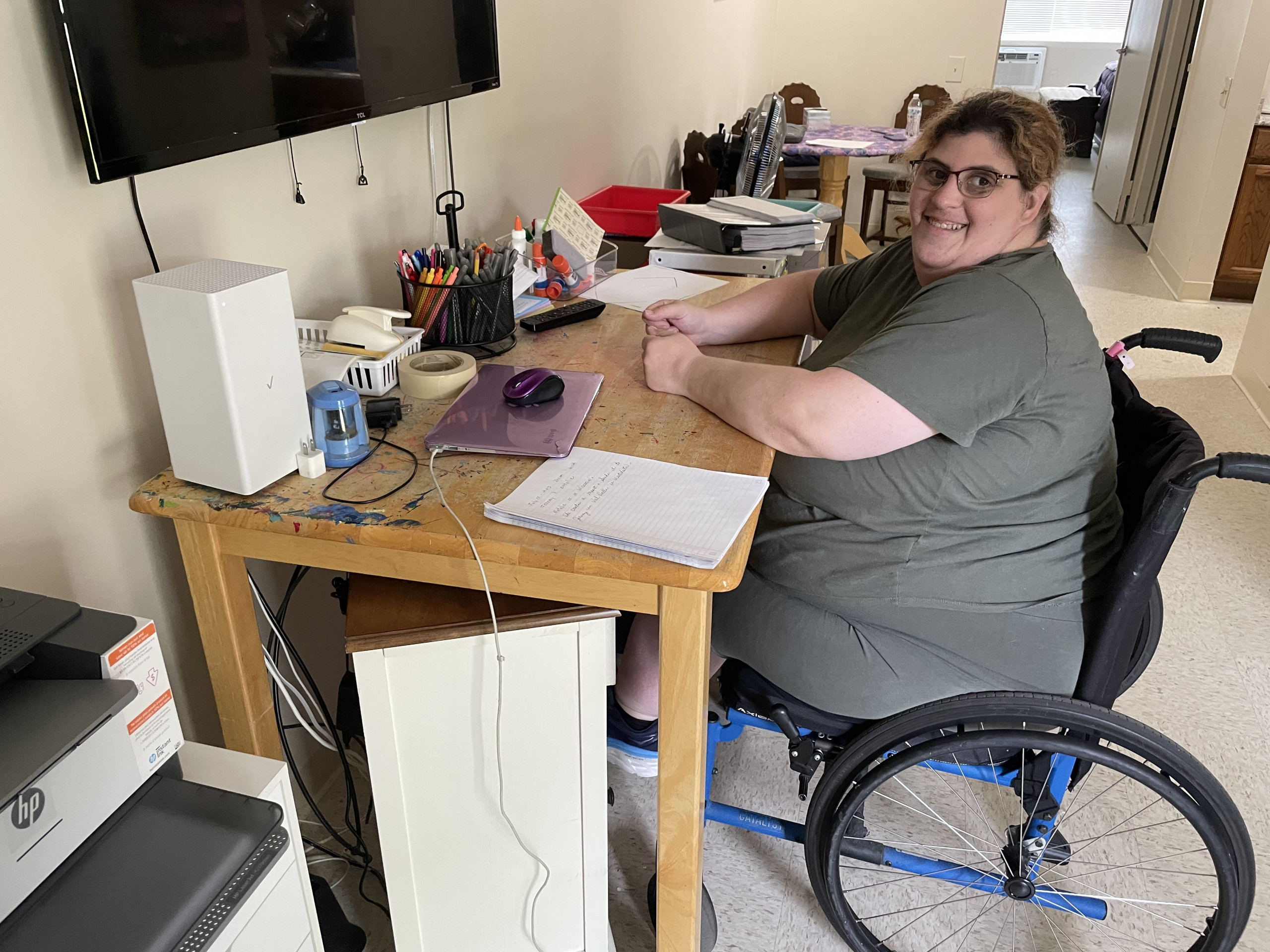
Stephanie Kane at her desk
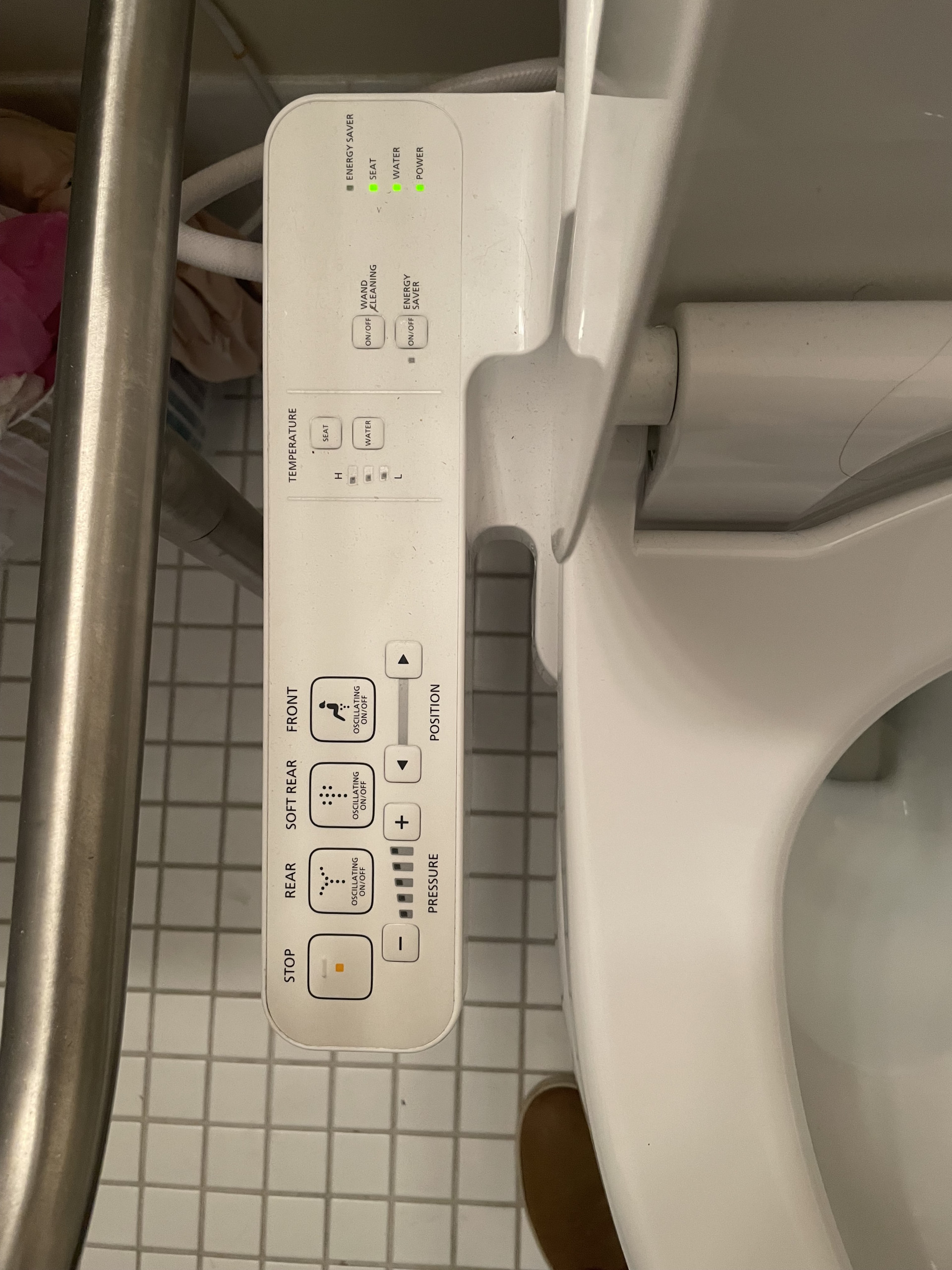
Bidet
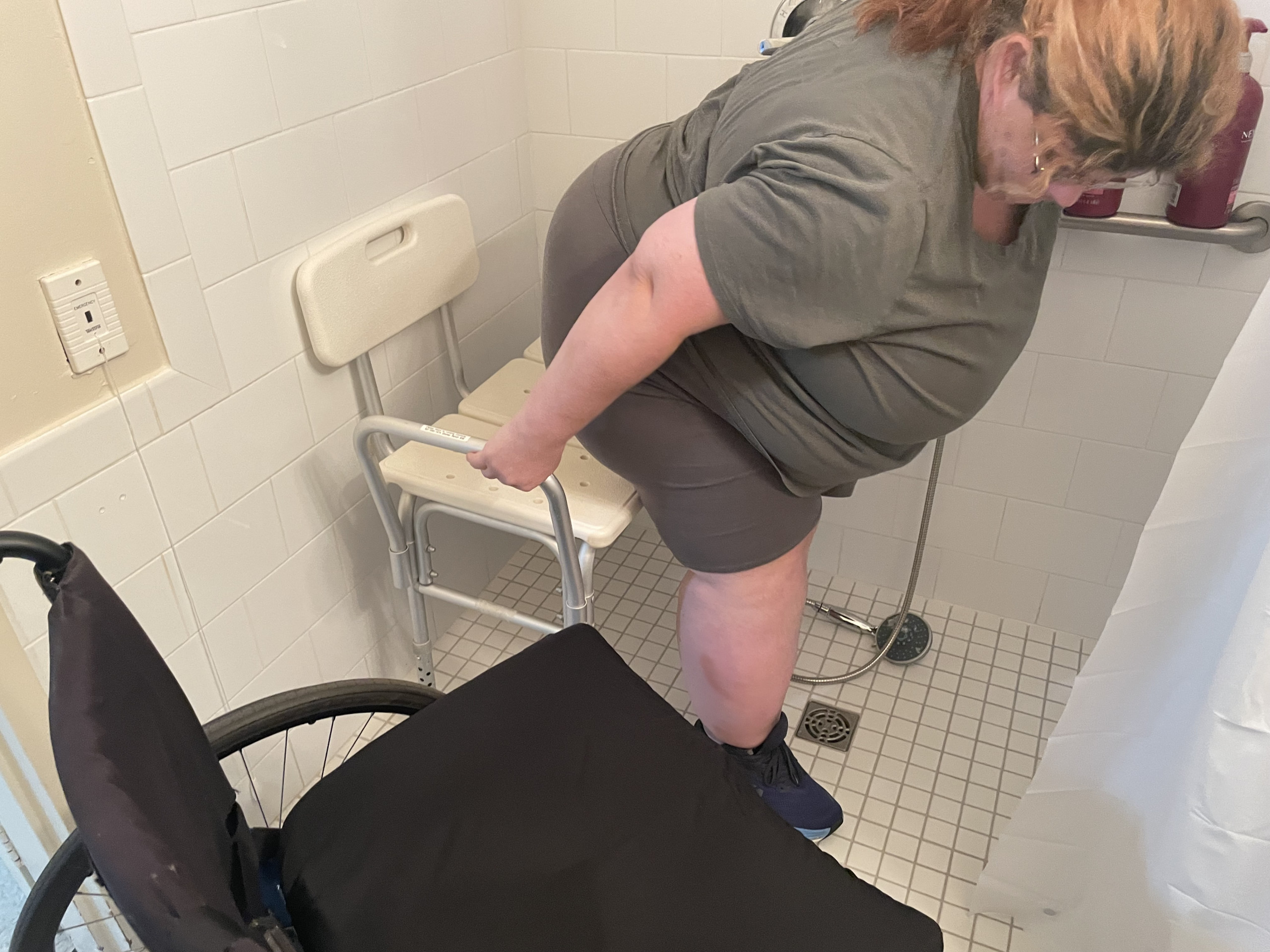
Shower transfer
Video Transcripts:
Echo Show.mov: [Tony: “You’re talking about using the Echo Show in your living room.”] Stephanie: I call it ‘Computer’. I don’t even want to say it. [Mom, on phone, “Go ahead.”] “Computer, what time is it?” [Echo responds] [Tony: “And so, what things do you use it for?”] “Computer, what temperature is it outside?” [Echo responds] “End computer.”
Ring Doorbell.mov: “I love the Ring doorbell, because I can be in the kitchen, someone could be at my door, I have my phone with me, I can see…the maintenance guy was at my door. I picked my phone up, ‘One minute! I’ll be right there!’ Or I could say, ‘Come on in, I’m in the kitchen.’ I can say, ‘Walk in, use your key.’ I love it!”
Other Summary Notes:
My main disappointment about this case is that the landlord refused smart overhead lights and a smart front door lock. Stephanie could better conserve energy and feel safer if those items were in place. We were able to provide voice-enabled lighting in the bathroom and a smart standing lamp, however, which helps.