
Outcomes Report and Case Study
SAIL Participant – Rebekah Heckler
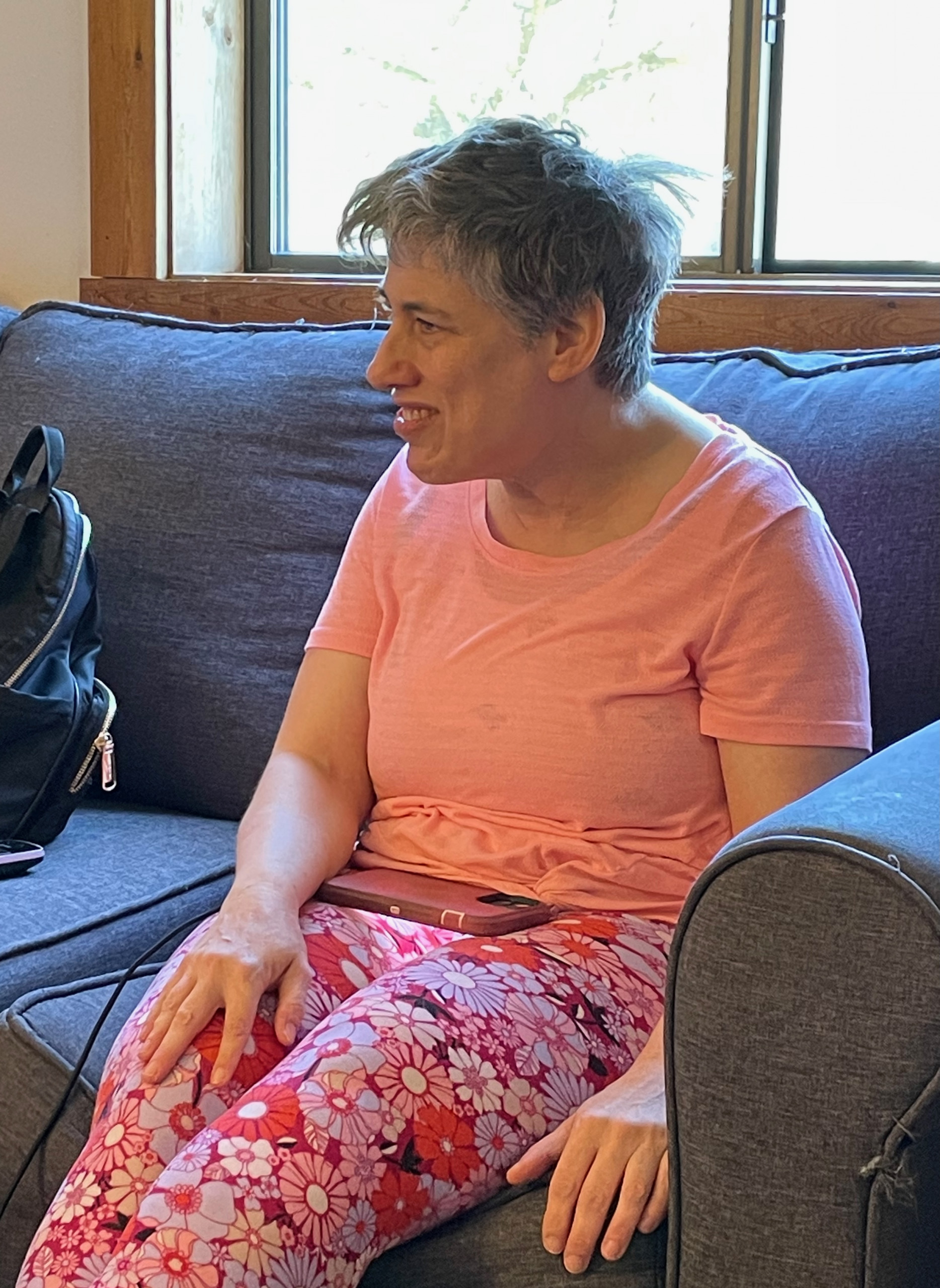
Rebekah Heckler
Brief Summary:
This 52-year old woman, who is legally blind and mobility impaired (CP), finds that the individualized suite of smart home tools provided by the grant have improved her safety, medication adherence, energy conservation, and functional performance in the home. Being able to control home lights and appliances by voice or phone app, and to manage her front door lock by phone app or touchpad has allowed her to better make use of the vision that she does have, and reduces her falls risk, because she no longer needs to get up to manage her lights, tv and thermostat. For the first time in her life, she is now able to reliably manage her medications using a color-coded reminder pillbox, and having an accessible spice rack makes cooking easier.
Seeing how these tools helped her then motivated her to seek additional assistive technologies on her own. She discovered a phone app that can help her identify objects, and now uses a Tile finder attached to her phone, in case she misplaces it. She says she is eager to share these innovations with others like her, who have complex disabling conditions.
Key Phrases from Interview:
-
“can now use what sight I do have”
-
“more independent”
-
“I know what day to take my meds and what I took and what I didn’t”
-
“can reach my spices when I need to, which is awesome”
Outcome Report Narrative:
Rebekah (Becky) is a 52-year old (birthdate 7/20/72) unemployed white woman with cerebral palsy, who is also legally blind.[1] A high school graduate, she lives alone in a one-bedroom ground floor apartment in Gansevoort, NY. An aide provides in-home assistance with functional tasks from 8 am-5 pm five days/week.
Becky is an active and creative individual, who composes piano music (a friend transcribes her playing to notes), has a black belt in adapted tae kwon do, and competes in track events using a rolling walker, among other activities.
SAIL staff member April Diffee enrolled Becky as a participant in the WIHD smart home project on 2/27/2023. April also conducted the initial AT assessment and oversaw provision of recommended equipment. At the outcomes interview on 4/24/2025, Rebekah, an aide, and April were in attendance.
Becky walks with a single-point cane in the apartment, and can navigate on her own there when all lights are on bright. In the community, she uses a rolling walker, always accompanied by an aide, because of her blindness and falls risk. April provided the following equipment, along with training in using it:
- Google Home voice-activated assistant devices (in living room and bedroom),
- A Yamiry smart door lock (app or code activated),
- GE smart bulbs and wall plugs for all four rooms of her apartment (nine lights total),
- a Google Nest smart thermostat,
- a smart wall plug to control the standing fan in her bedroom,
- a reminder pill-box selected for ease of use by the blind and memory-impaired,
- a rolling grocery cart,
- a spice rack mounted on side of fridge for easy access,
- a smart smoke and CO detector, and
- apps linked to smart devices.
The wifi-linked products, activated by the Google Home Assistants, can be operated by voice, so Becky does not have to find her way to them to operate them. Becky’s smart tv has also been linked to Google Home. Becky demonstrated voice-enabled on/off of lights during the interview. April also installed apps on her iPhone, so that the Google Home devices can be controlled by tapping inside the apps, but Becky typically prefers voice activation, as she must hold the phone an inch from her eye in order to see the screen, making app navigation troublesome and slow (see photo Rebecca-Phone-App).
The smart lighting is intended to provide Becky as much light as possible in the apartment, and all of the smart devices are intended to help her avoid reaching for wall switches, both as a time saving measure and also to help reduce the risk of falling.
See photos: living-room-Google-Home.jpg; bedroom-fan.jpg; nightstand-tech.jpg; smart thermostat.jpg.
An app-controlled keypad door lock was installed on Becky’s front door. She demonstrated (see video: Rebekah-Unlocks-Door-With-Phone – :40) using her phone to unlock the door. Raised tabs were added to the keypad lock as well, so she can correctly use the keypad to open the door by touch, if she prefers.
April provided a reminder pillbox that is color-coded by day and can be filled once a month. Becky described how she is able to use the pillbox, switching each day’s pill container from red to green once she’s taken her pills, in order to prevent mistaken dosage (see video pill-box.mov – :13).
April provided a spice rack that is attached to the side of Rebekah’s refrigerator. Previously, the spices had been stored in a wall cabinet that Rebekah could not reach (see photo Accessible Spice Rack.jpg).
Transcript of video (Rebekah-Explains.mov – 1:12) describing how she uses these tools:
The more lighting, I can use what sight I have with the lighting to make it brighter so I have a little bit more sight. The thermostat makes me more independent because I can see what I’m setting it to, and the one I had before, I couldn’t see it and I had to ask someone to help me. So that one helps. The med thing helps because I know what day to take my meds, and what I took and what I didn’t. The spice rack helps a lot that I can reach my spices when I need to, which is awesome.
Interviewer: How about the front door?
Yeah, that helps me too. It locks by itself when you shut it. I can also turn the alarm thingy on so that nobody can get in but me.
See video demo of opening front door with app (unlocks-door-with-app.mov – :42), transcript:
[Holding phone close to eye]. Sometimes my phone does that, it’s stupid. I open up the smart home folder. I tap the lock. I unlock that. Double tap. [Phone says “unlocked”]. See? [She opens door] It seems to work the best for me with the phone. Before, because of the CP, it could get a little tricky.
See video explaining use of pill box (pill-box.mov – .13, and pillbox photo), transcript:
Um, you know where that little thing sits? Then, I’ll know okay I’ll take my night meds, then I’ll turn it to green and put it back in.
Additionally, April provided a rolling grocery cart that Becky eventually found a little risky to use, because it does not have brakes like her rolling walker, so she fears falling while using it. April agreed to seek out a cart that does have brakes to replace the cart.
Inspired by the smart home provisions of the grant, Becky sought additional functional solutions. She discovered and installed an app for the blind called Be My Eyes, which she demonstrated in the interview. This app allows the user to share a camera image with an offsite volunteer, who can identify things that the user cannot see. Her father provided a Tile tracker that allows her to find her iPhone if she misplaces it.
Becky said that she feels much more confident in her home now, because she can control lighting, thermostat, tv and fan all by voice, so she is able to have lighting when she needs it, and because she doesn’t have to get up to turn these products on and off, which saves energy and reduces risk of falls. By turning on the lights by voice before she stands, she can better see any obstacle in the apartment, such as either of her cats, who might be lying on the floor.
The smart door lock makes her feel safer at home, because it automatically locks. She can open it herself when she comes home using either voice or touch pad.
Thanks to the reminder pillbox, for the first time, Becky is now able to reliably manage her medications by herself.
The new accessible spice rack makes it easier for Becky to reach and use her spices when cooking.
SHUSS-NY Evaluation:
Becky’s satisfaction with the AT intervention was rated using the SHUSS-NY instrument. She rated every item on the 1-5 scale with a 5 (very satisfied). She noted that she was very satisfied with the selection of products provided, that she now uses them without difficulty, and that they meet her needs. The SHUSS-NY also assesses satisfaction with the intervention itself. She said that she was very satisfied with the assessment process, that she was actively involved in selecting appropriate AT, that the intervention was timely, and that the training provided was very good. She said that April has been highly responsive to any call for assistance. The highest summary score available on the SHUSS-NY is a 10. Becky rated her experience a 10.
The SHUSS-NY asks participants to note which 3 of the 9 satisfaction items they consider most important. Becky identified: (1) use without difficulty, (2) equipment works effectively, and (3) information and training provided.
Other Summary Notes from Interview:
Becky said she was surprised to learn about the various voice-enabled tools introduced by April, and happy to see how she can more safely and efficiently manage getting around in her apartment and using lights and appliances now. It means a lot to her that for the first time in her life she can reliably manage her own meds and access her front door by herself. The low-tech accessible spice rack has helped her organize and access spices for cooking, and the vision app has helped her identify objects, clothing, and other items, as needed. She is especially happy that she can operate her smart home devices by voice from her chair, or by using her phone, if she wishes. These tools, taken together, have empowered her to rely less on home aides, and to feel safer and more functional at home at nightsand and on weekends when she is alone.
Becky noted, too, that April’s intervention was sensitive to both her mobility and sensory issues. This was not a cookie cutter case, and because April worked to address both visual challenges and mobility, an individualized suite of smart devices has proven truly enabling for Becky.
Photos:
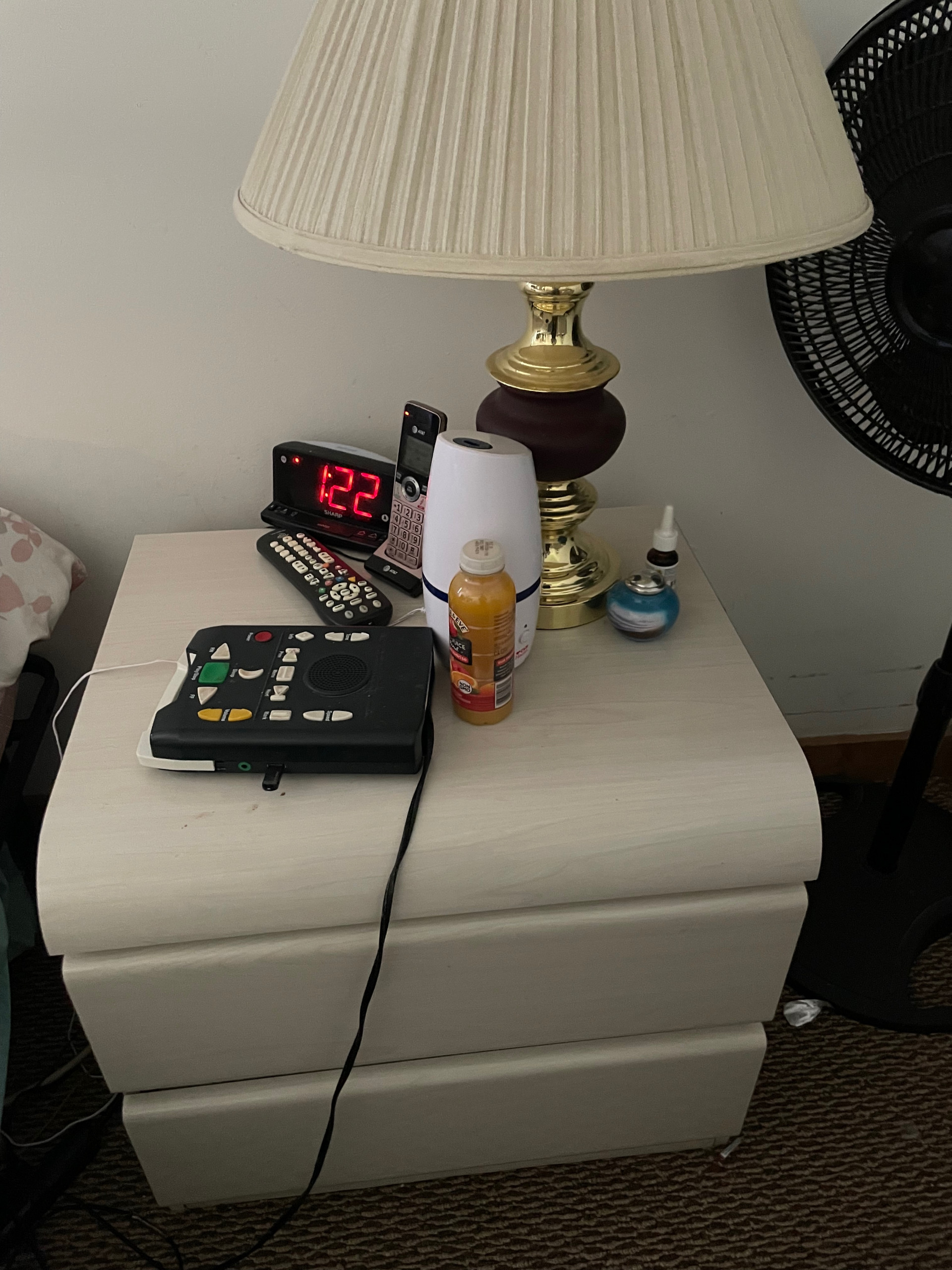
Nightstand tech
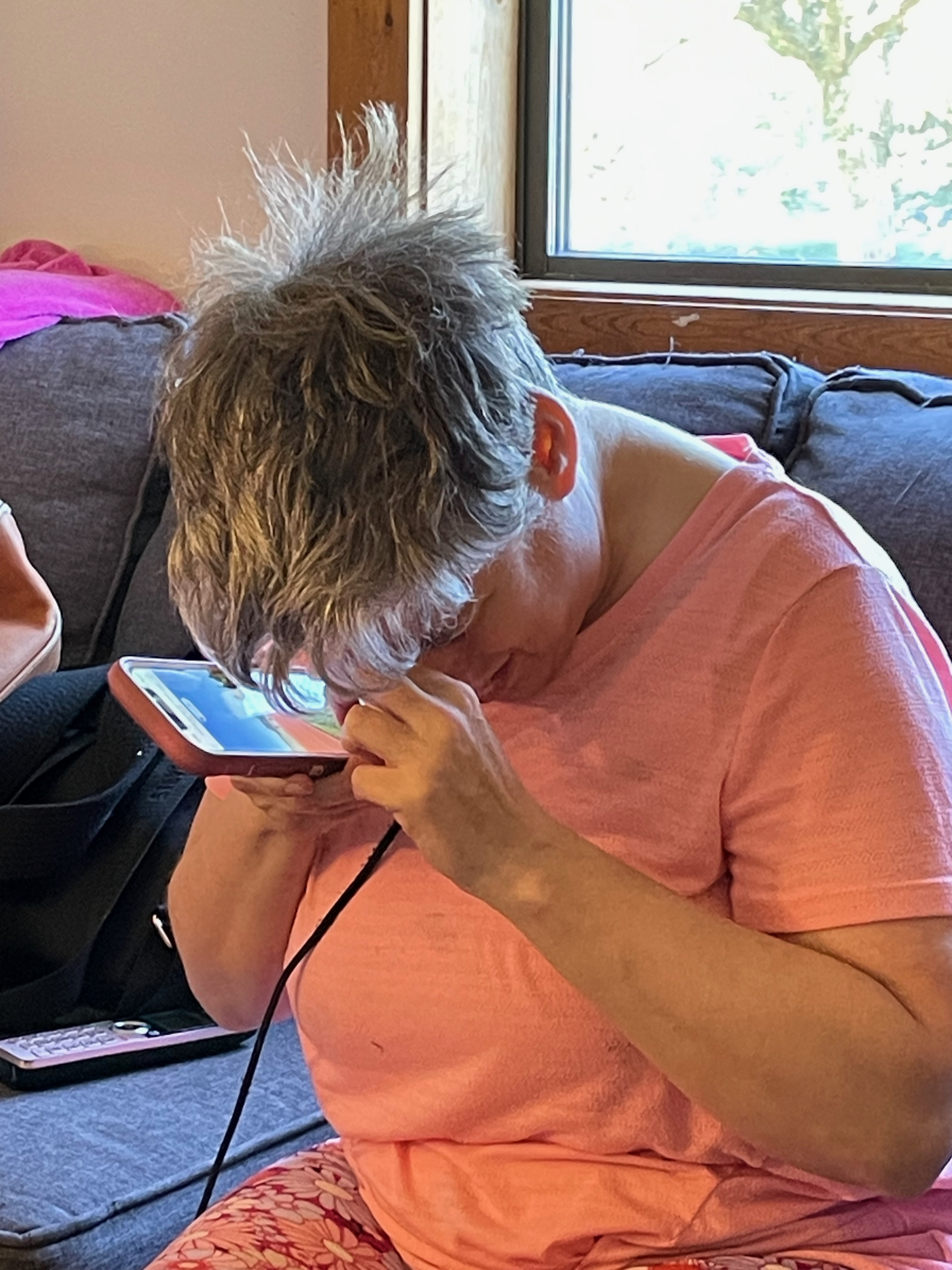
Rebekah using her phone app
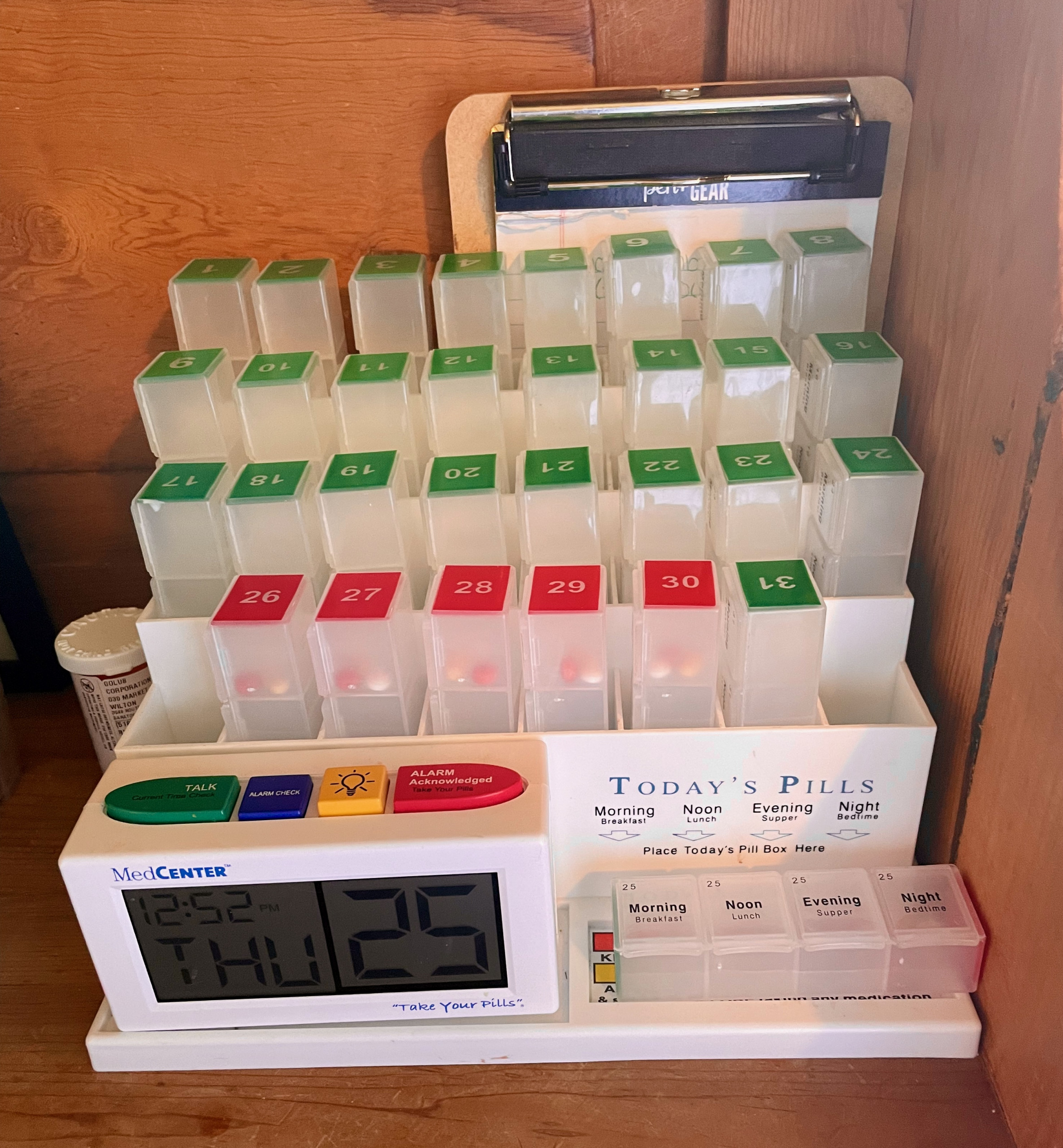
Reminder pill box
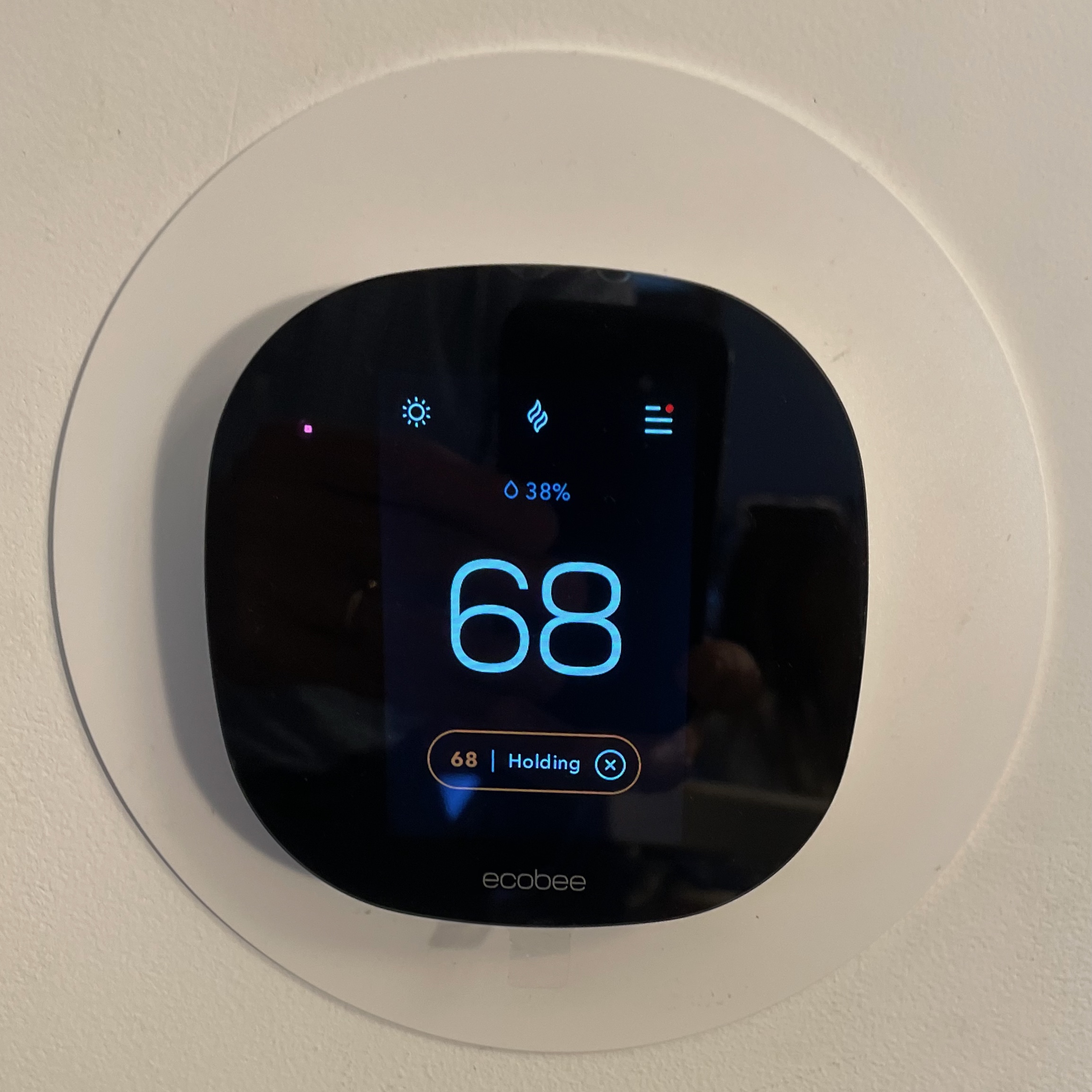
Smart thermostat
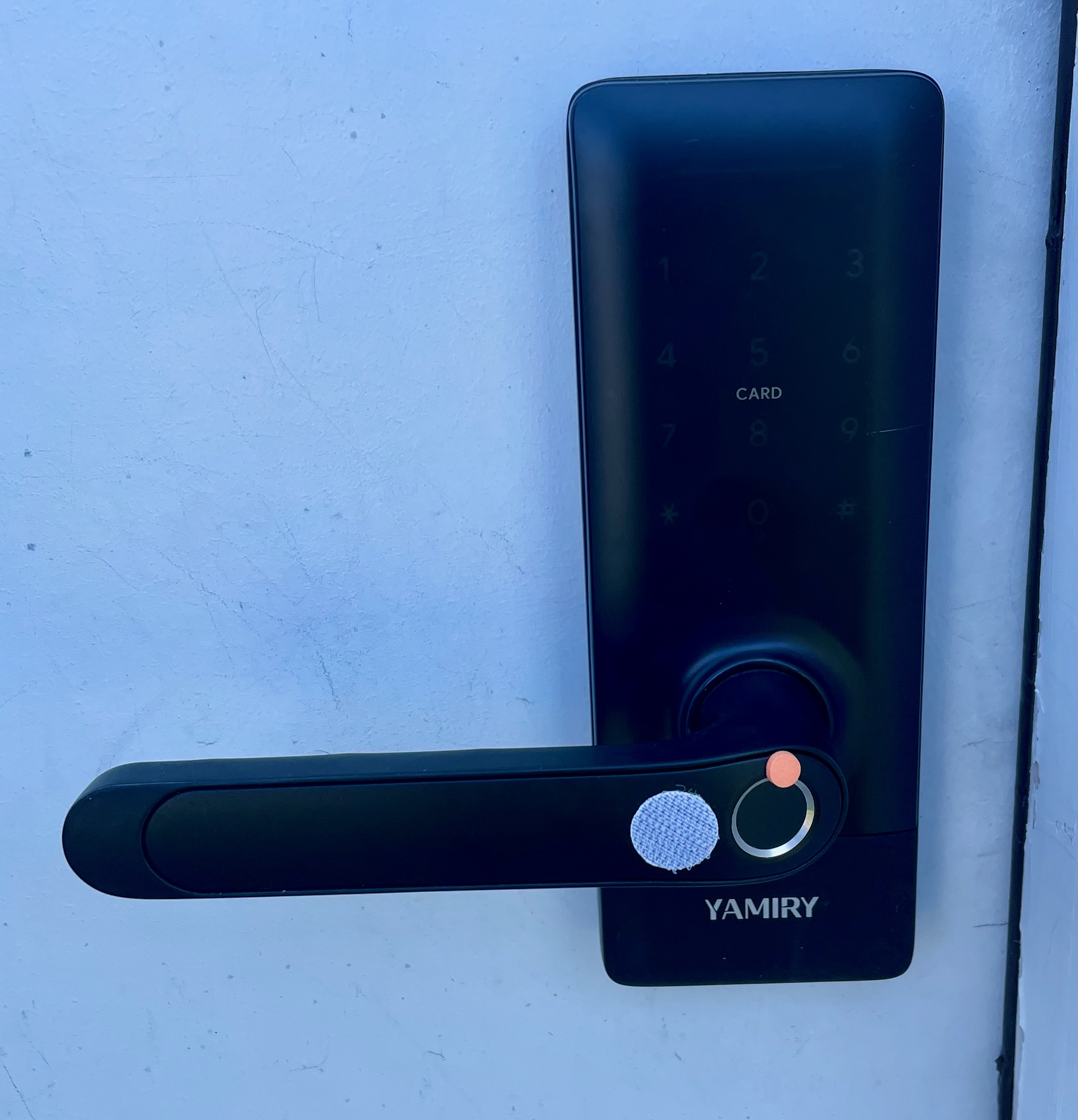
Smart lock
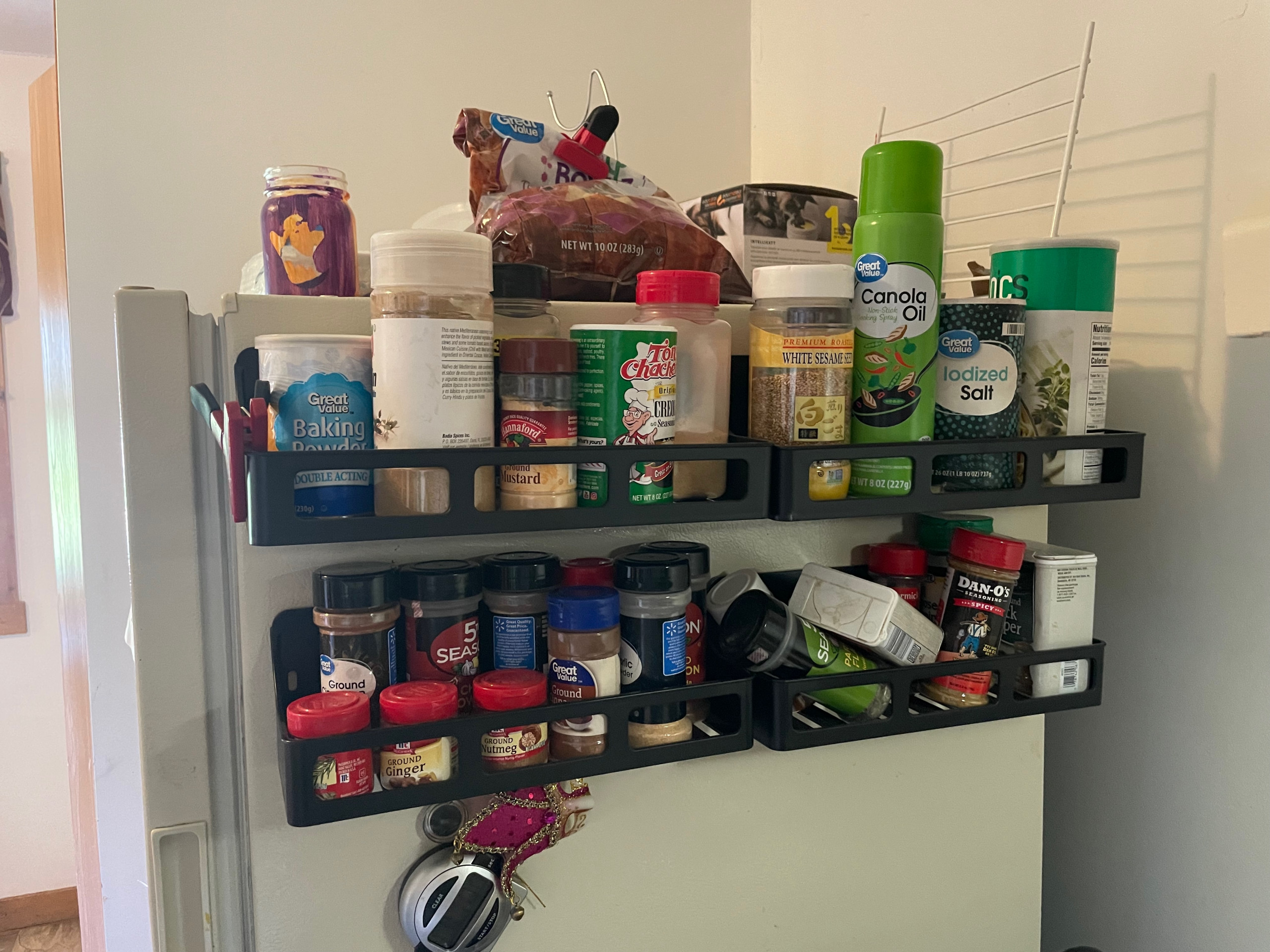
Accessible spick rack
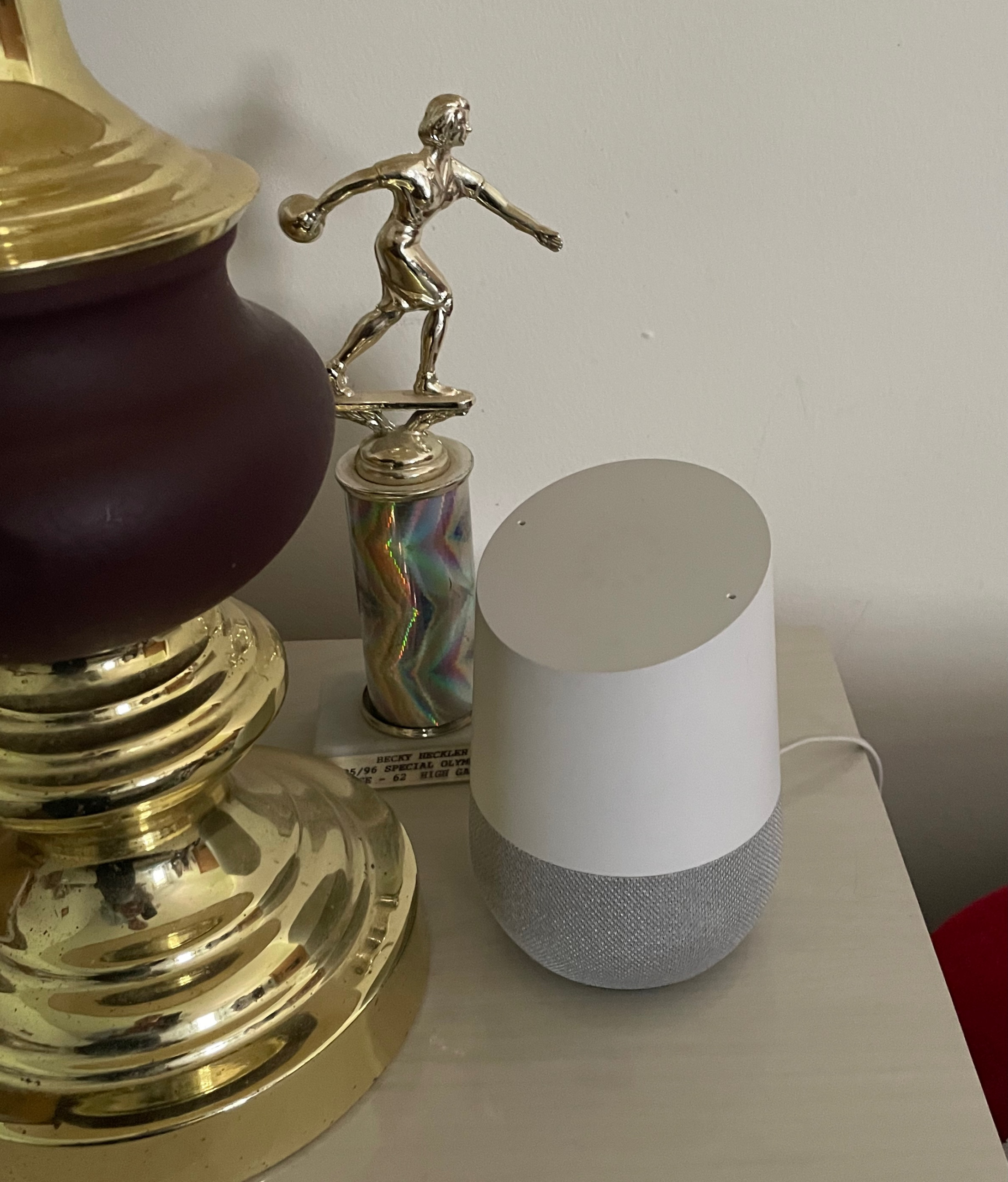
Living room Google Home
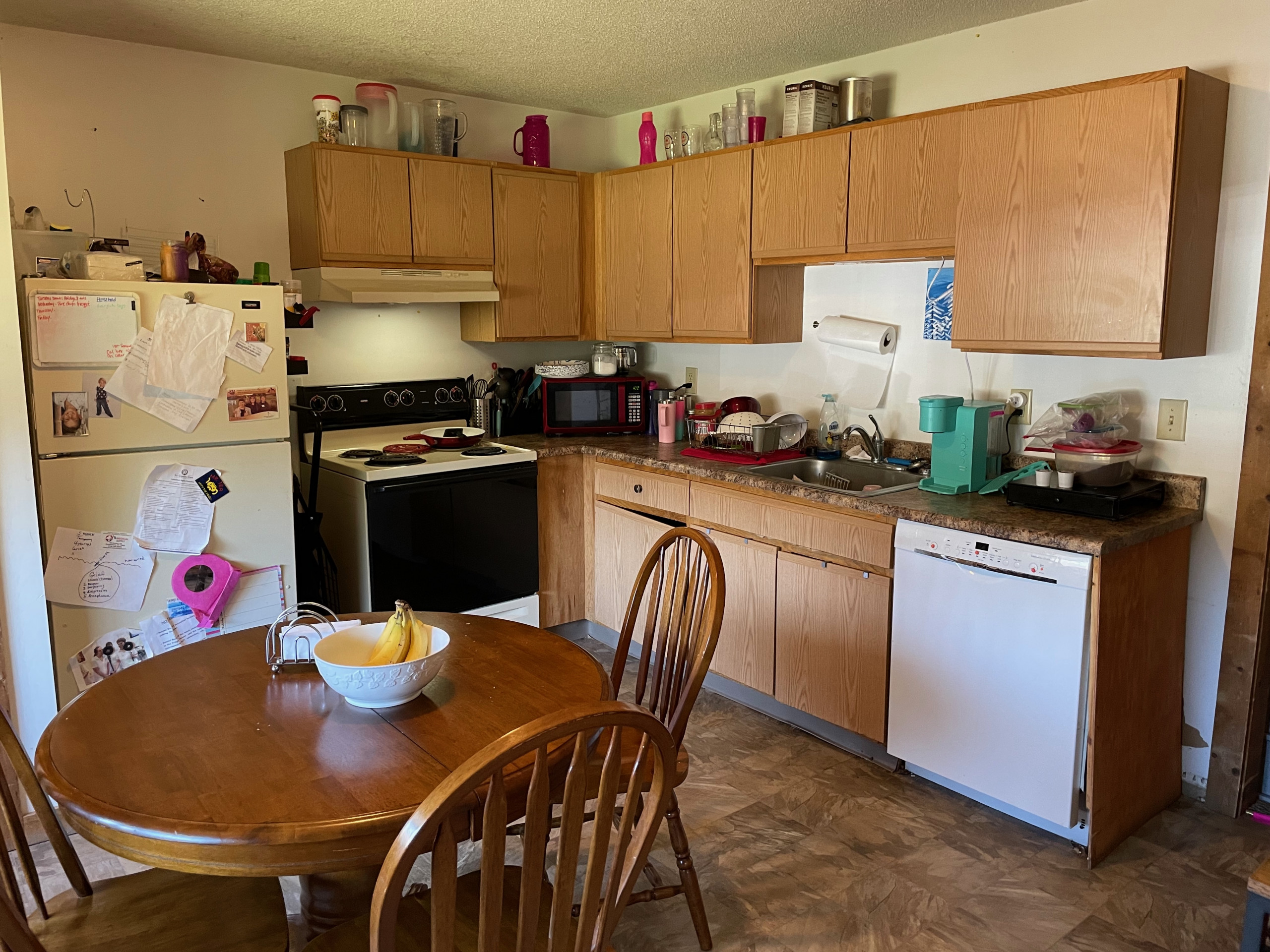
Kitchen
Videos:
Pill-box.mov (:13)
Rebecca-Unlocks-Door-with-phone.mov (:40)
[1] The WIHD intake form lists additional conditions as: (1) mental health disorder and (2) intellectual disability.